
You’ve probably seen these images circulating online…

Many people believed this was real… but it was AI :)

Remember the “Balenciaga Pope” image? Many people thought it was real — but it was actually AI-generated.

And then there was the AI-generated kangaroo with a boarding pass — another viral clip that fooled the internet.
Looks fun yeah?
But what if tomorrow you get an email. There's a video attached. It's your son. His face, his voice, a little panicked. "Dad, I'm in trouble, please send money."…
Or you open WhatsApp and there's a photo of your car being towed away with payment url to avoid towing. Same car. Same license plate. Same street you park on.
Or your phone rings, and it’s your bank. The voice knows your name, your last transaction, even the last four digits of your card. They say your account is being hacked and you need to “verify” a code right now. Same calm voice. Same official tone. Same details only a real bank should know.
That’s when AI fakes stop being funny!
Off-topic, but important
Photo manipulation existed long before AI
Fun fact: long before Photoshop and AI, Stalin’s Soviet Union was already “editing reality.” When people fell out of favor, they were sometimes removed from photographs — and, in effect, from the official version of history.
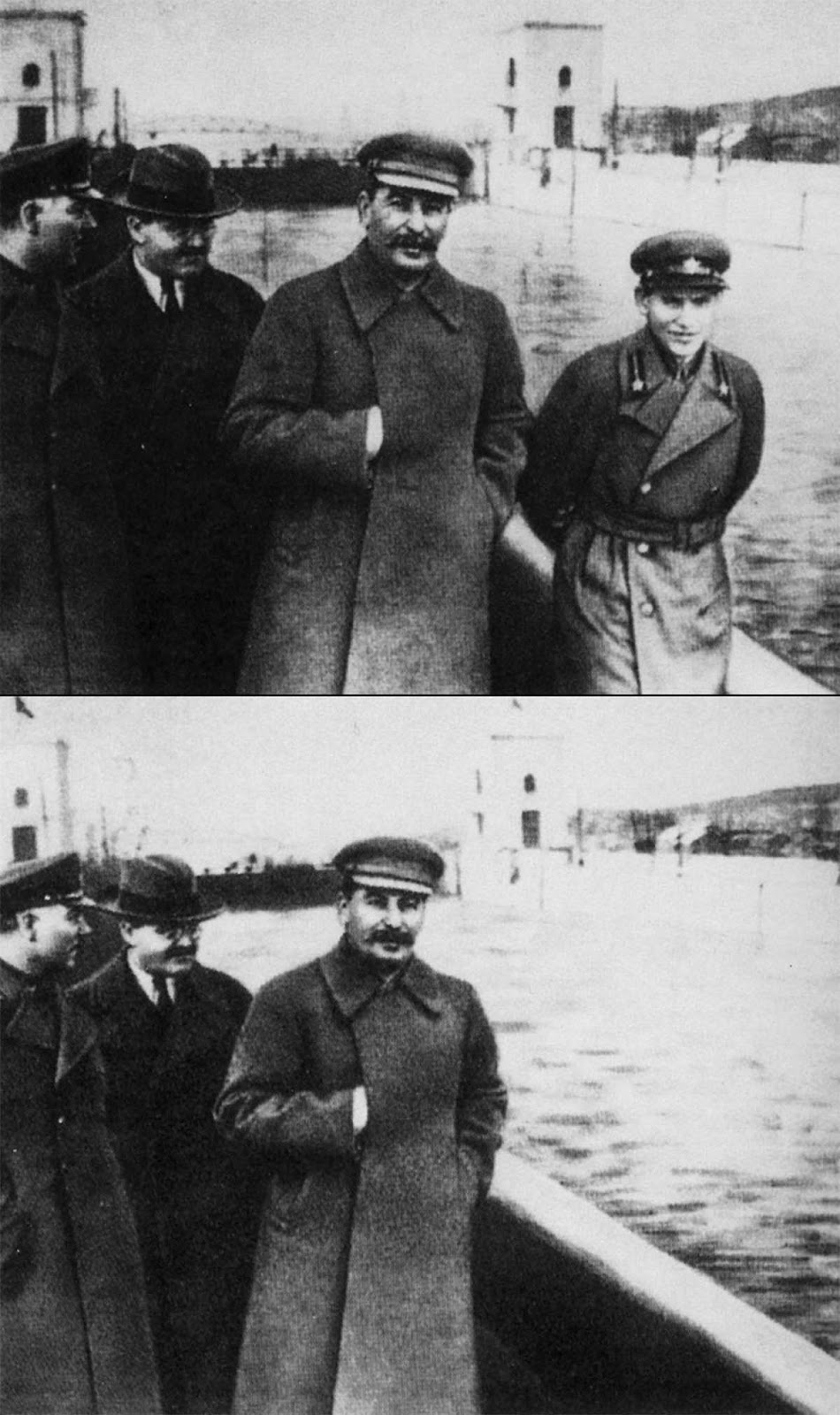
The tools changed. The danger is the same: images can make rewritten history look real.
So I will start with the bottom line and bad news: I'm not going to sugarcoat it: there is no bulletproof button you can press to know for sure. No magic scanner. No app that says "FAKE" in red letters every time. It doesn't exist. Not yet, maybe not ever.
But that doesn't mean we're helpless. Let me explain what's actually going on, in plain language.
First, why this is even a problem
AI image and video generators are incredible. You type a sentence, you get a photo. You describe a scene, you get a video. It's genuinely fun, and honestly most of us use it for good stuff — memes, art, mockups, making our kid laugh by putting the dog on the moon.
But the same tool that put bunnies jumping on a trampoline put words in a politician's mouth. Or clone your son's voice from a 10-second TikTok. Or fake a photo of something that never happened.
That's the deal with powerful tools. They don't care who's holding them.
So the world needs a way to tell real from fake. And a bunch of smart people have been building exactly that. It's just... not finished. And it may never be "finished" the way you'd hope. Again, I want you hear it =>
There is no bulletproof technology that can save us 100% of the time.
Not SynthID.
Not C2PA.
Not Instagram AI labels.
Not AI detectors.
Not “I can tell with my eyes.”
All of these tools can help. But none of them guarantees result.
Let's look at what they've built.
The two big ideas people are trying
There are basically two strategies. Think of them as two different questions.
Idea 1: The invisible stamp (watermarking) Question it answers: "Was this made by AI?"
Idea 2: The birth certificate (provenance) Question it answers: "Where did this come from, and who touched it?"
These sound similar but they're really different. Stick with me.
Btw, if you prefer watching videos, below you can find our Youtube video on this topic:
Idea 1: The invisible stamp — SynthID
Google built a thing called SynthID.
Here's the idea. When Google's AI makes an image (or audio, or video, or even text), it secretly bakes a pattern into it. A watermark. But not the ugly kind you see on stock photos — this one is invisible. You can't see it, hear it, or notice it. It's woven into the pixels themselves.
Then, later, Google has a detector that can look at that image and go "yep, there's my stamp, this came from my AI."
Think of it like invisible ink that only shows up under a special lamp. The picture looks totally normal to you. But the lamp knows.
Google has been stamping billions of pieces of AI content this way. And in 2025 they opened up a website called the SynthID Detector where you can upload something and it'll check for the stamp.
Other companies are doing similar things. Meta has its own watermarking for AI audio. OpenAI has been adding invisible signals too. It's becoming standard practice among the big players.
Sounds great, right? Hold that thought.
Idea 2: The birth certificate — C2PA and "Content Credentials"
The second idea comes at it from the opposite direction.
Instead of stamping the fakes, what if we could prove the real stuff?
That's what C2PA does. (Terrible name — it stands for "Coalition for Content Provenance and Authenticity." You'll also see it called Content Credentials. Same thing.) It's backed by Adobe, Microsoft, Google, and a pile of camera companies.
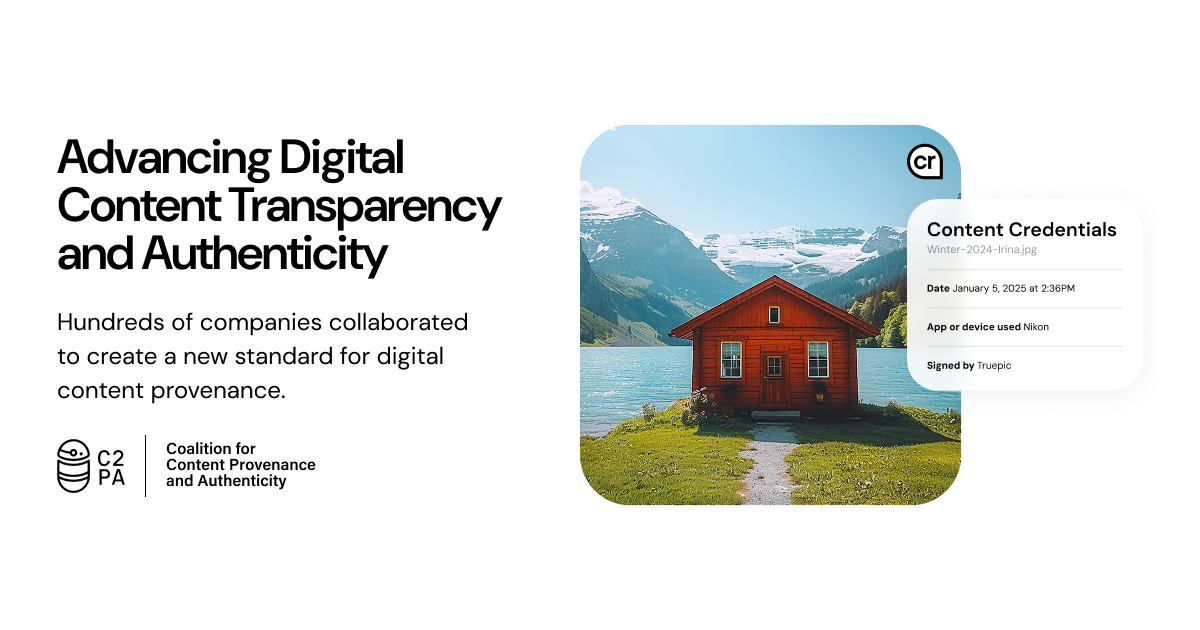
Here's how it works. Attached to a photo, there's a little invisible file — like a receipt, or a nutrition label. And that label says stuff like:
This photo was taken on a Sony camera on this date
Then it was opened in Photoshop
Then someone used AI to edit part of it
Then it was exported here
And the whole thing is cryptographically signed — meaning it's sealed in a way that's really hard to fake. If someone tampers with the receipt, the seal breaks and you can tell.
Some new cameras from Leica, Sony, and Nikon can do this at the moment you press the shutter. So a press photographer can prove "this is a real photo I actually took," which matters a lot for news.
You can check this yourself right now. There's a free website — contentcredentials.org/verify — where you drop in an image and it shows you the receipt, if there is one.
So: SynthID stamps the fake stuff. C2PA proves the real stuff. Two different lamps.
Now here's where I have to be honest with you.
Why none of this actually saves you (the limitations)
I told you there's no bulletproof solution. Here's why. And this is the part most articles skip.
Problem 1: Anyone can run their own AI with no stamp at all.
The watermark only exists because Google (or Meta, or OpenAI) chose to add it. But a lot of AI models are open source — free, downloadable, and editable. Anyone can grab a model like LLaMA or Stable Diffusion, run it on their own computer, and just... delete the part that adds the watermark.
Problem 2: The birth certificate falls off easily.
That C2PA receipt? It's just metadata attached to the file. And a ton of everyday things strip it right off. Take a screenshot of the image — receipt gone. Upload it to most social media apps — they often squash the file and throw the receipt away. Re-save it, crop it, run it through a meme generator — gone, gone, gone.
So most images you actually see online have no receipt at all. And here's the trap: no receipt doesn't mean fake, and it doesn't mean real. It means you know nothing. Which is where we started.
Problem 3: The "one tiny edit" trap — and this one's really unfair.
Say you take a beautiful, 100% real photo of your friend. Perfect shot. But there's a distracting sign in the background, so you use AI to erase it. One tiny edit.
Now the system might slap an "AI-edited" or even "AI-generated" label on your real photo.
Meanwhile, a total deepfake with the watermark stripped out gets no label at all.
See the problem? The honest person who fixed a blemish looks suspicious. The liar looks clean. The labels can punish the wrong people. The newer versions of Content Credentials are trying to be smarter about this — showing what kind of edit happened instead of a scary blanket "AI" stamp — but plenty of tools still get it wrong, and a label without context misleads more than it helps.
Problem 4: Fakes can survive a wash cycle... or not.
Watermarks are supposed to survive cropping, compression, and filters. Sometimes they do. But researchers keep showing you can weaken or remove them — shrink the image, add noise, run it through another AI, and the stamp can wash out. It's a cat-and-mouse game, and the mouse is fast.
So what do you, a normal person, actually do?
Okay, enough doom. Here's the practical part. Since no tool is bulletproof, you are the detector. Here's your toolkit.
Slow down. Urgency is the tell. Almost every scam — son needs money, car got towed, account is locked — comes with pressure. "Right now! Hurry!" That panic is the weapon. The single most powerful thing you can do is pause. Real emergencies survive a phone call.
Use a second channel. Got a video of your son begging for money? Call him. Or call his roommate. Or your family group chat. A fake video can't answer the phone. Agree on a family password for real emergencies — a silly word only you know. Voice cloning can't guess it.
Check the receipt — when there is one. Drop the image into contentcredentials.org/verify. If there's a Content Credential, you'll see where it came from. For AI content, Google's SynthID Detector can check for its stamp. Just remember: a hit is useful info, but no hit proves nothing.
Look for the dumb mistakes. AI is getting scary good, but it still fumbles details. Weird hands and fingers. Garbled text on signs. Jewelry that melts into skin. Backgrounds that bend wrong. Blinking that's slightly off in video. Zoom in. Fakes often fall apart up close.
Consider the source. Who posted it? A verified news outlet, or a random account made last Tuesday? Is anyone else reporting this, or is it suspiciously alone? Your friend "meeting Ronaldinho" is easy — ask him. A shocking world event with only one blurry source? Wait for the rest.
Watch this TED video…
Subscribe to our newsletter and channel, we follow all the latest news on this topic so you don’t have to.
Check these tools we have prepared for you:
Tool | Best for | Notes |
|---|---|---|
Google Lens / Circle to Search | Reverse-searching screenshots | Best first step. Helps find if the same image/video appeared before, or if fact-checkers covered it. |
InVID-WeVerify Plugin | Viral videos | Splits videos into keyframes, lets you reverse-search frames, check metadata, and inspect suspicious images. Very useful for Instagram/TikTok clips. |
Content Credentials Verify | Checking provenance / C2PA metadata | Good for seeing whether a file has official “created/edited by” credentials. But if nothing appears, it does not prove the image/video is real. |
OpenAI Verify | Checking OpenAI-generated images | Checks images for OpenAI provenance signals like C2PA metadata or SynthID watermarks. Currently focused on images generated with OpenAI tools. |
Gemini / SynthID verification | Checking Google AI images/videos/audio | Upload the file to Gemini and ask if it was created or edited by Google AI. Best for content made with Google tools, not all AI tools. |
AI/deepfake detector tools
Tool | Checks | Good for |
|---|---|---|
Deepware Scanner | Video | Quick deepfake video scanning. Useful for suspicious face/video clips. |
Hive AI Detector | Image, video, audio, text | Has AI-generated/deepfake detection APIs and a demo/extension for checking media. |
Image, audio, video | Free/public-interest deepfake detection tool; useful for political/news-style content. | |
Reality Defender | Image, audio, video | Stronger professional/commercial tool for deepfake and AI-manipulated media. |
Sensity AI | Image, video, audio | More forensic/professional; analyzes visual artifacts, acoustic patterns, metadata, and inconsistencies. |
Sightengine Deepfake Detection | Image, video | API-style tool for detecting face swaps/manipulated faces in images or videos. |
WasItAI | Images only | Simple AI image detector for checking whether a picture was likely AI-generated. |
The bottom line
Here's the honest truth, the thing I want you to walk away with.
The dream of a magic "is this fake?" button is exactly that — a dream. The technology to catch every fake doesn't exist, and because anyone can build their own AI, it probably never will.
The smarter bet the industry is making is the opposite one: instead of trying to catch every lie, prove what's true. Build cameras and tools that stamp real content with a solid birth certificate, so that over time, the stuff without a trustworthy history is the stuff you learn to doubt. It's slow. It's not perfect. But it's the more realistic path.
Until we get there, the best deepfake detector on the planet is YOUR BRAIN a healthy dose of "hang on, let me check that." Slow down. Call back. Ask questions. Assume that anything shocking, urgent, and emotional deserves a second look before you react — especially before you send money.
The machines got really good at faking reality. So we have to get really good at pausing before we believe it.
That's not the answer anyone wants. But right now, it's the one that actually works.
